The hills have
stories in colour.
Draguć’s most intimate encounters with history happen inside its chapels. Their scale is modest; the paintings ask for a much slower look.
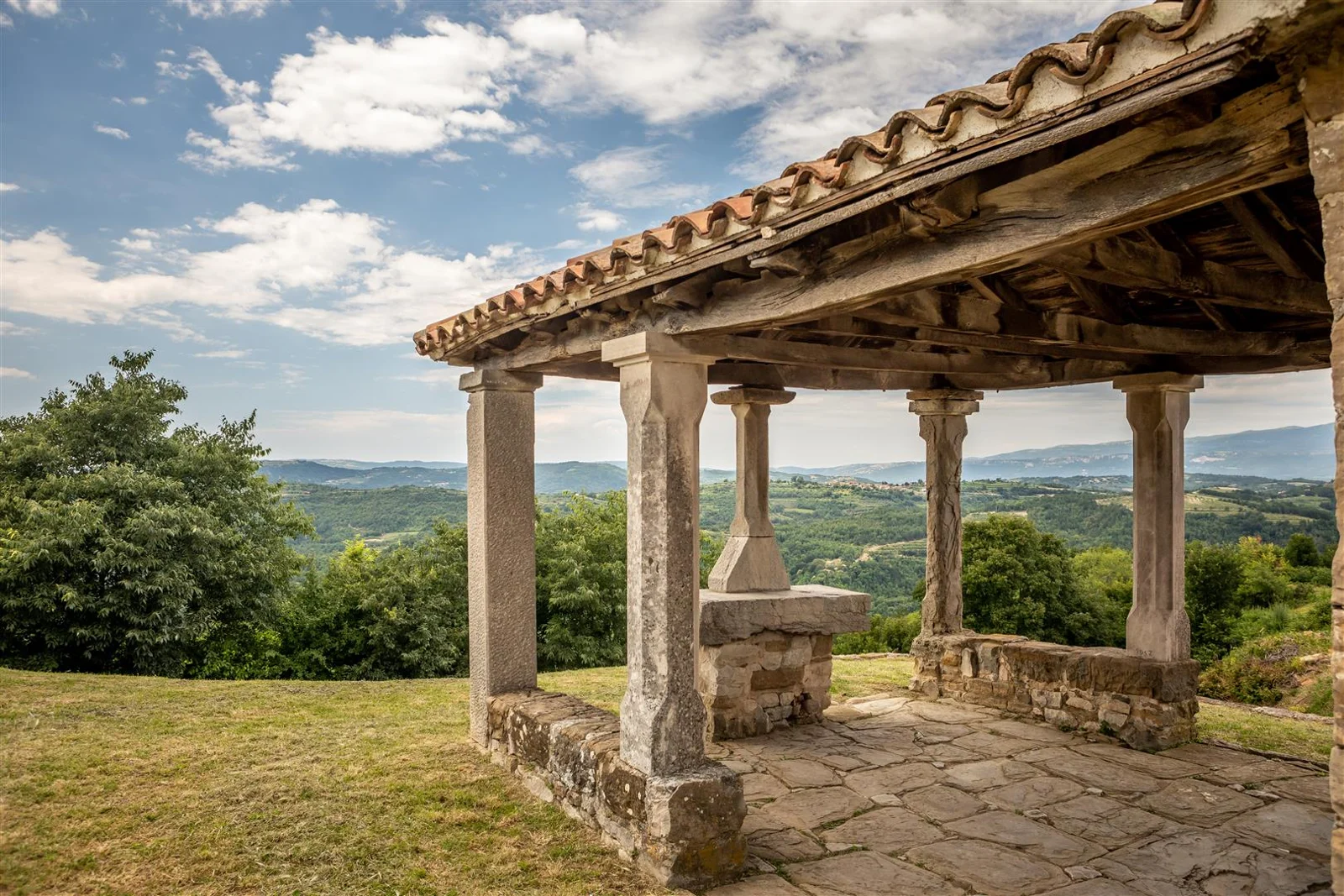 DRAGUĆ · ISTRIA
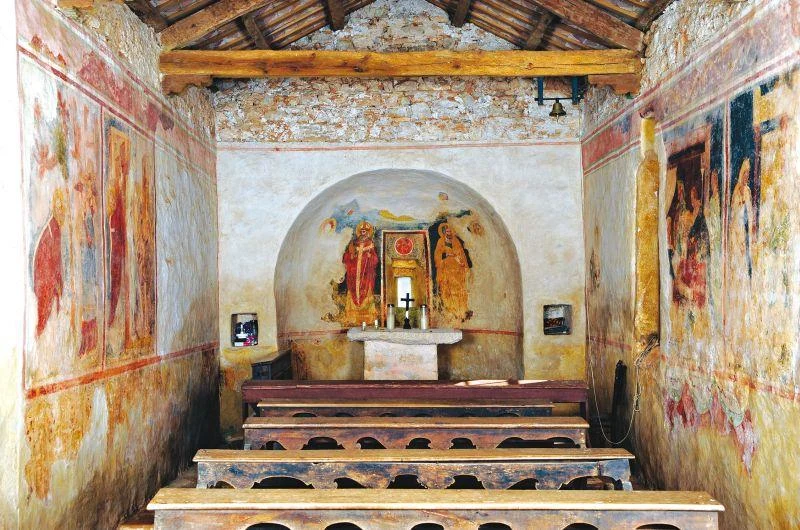
St Roch
Antun of Padova painted the interior in 1529 and 1537. His Padova was the area of present-day Kašćerga in Istria, rather than the Italian city. Scenes and figures unfold across the walls, holding the room together as one remarkable painted interior.
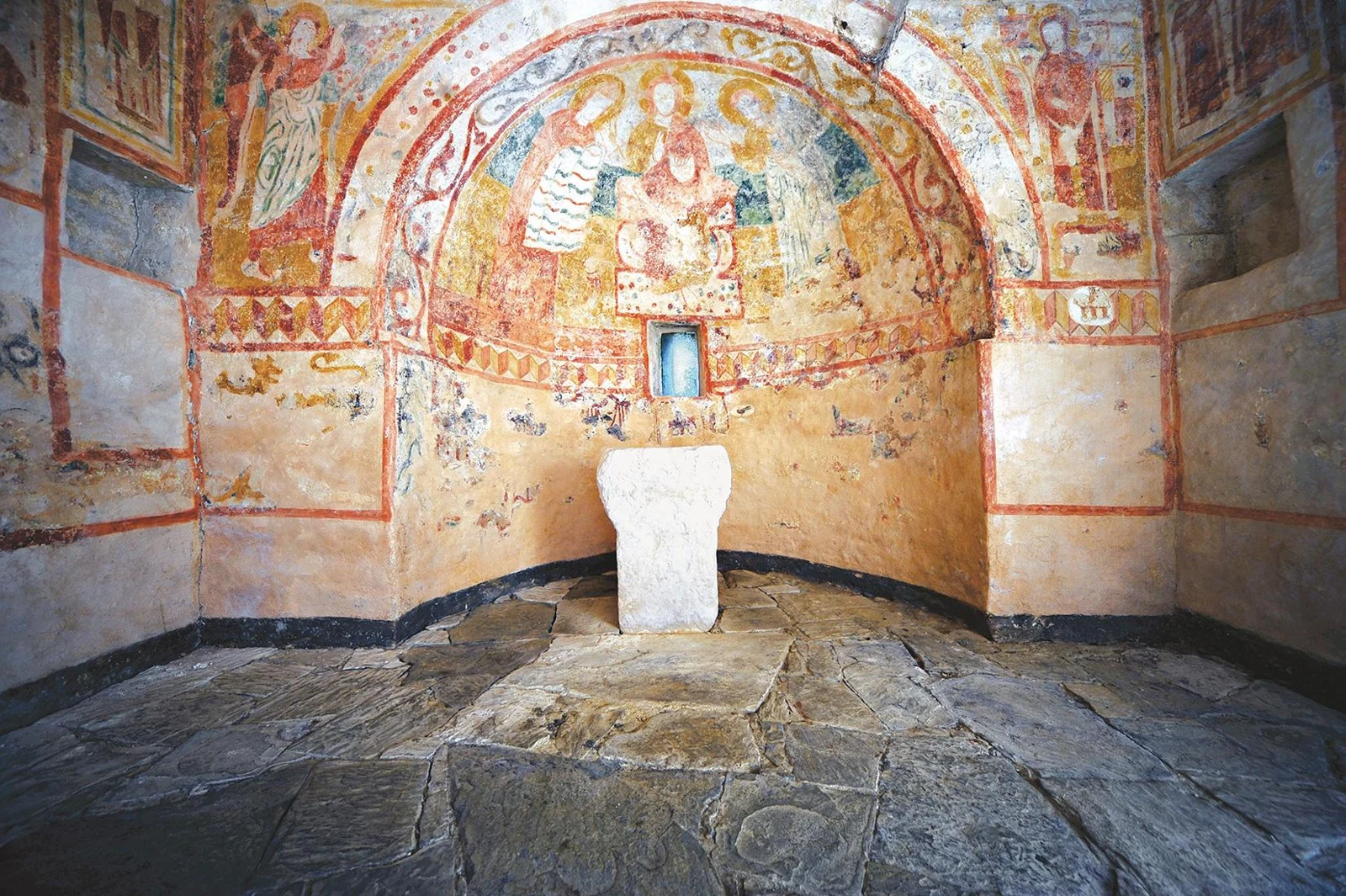
St Elisha
At the cemetery near the village entrance, this Romanesque chapel preserves late-thirteenth-century wall paintings. Alternating tones of stone give the outside its own quiet rhythm; inside, the surviving scenes offer a more ancient view of Istrian sacred art.
The House of Frescoes
The former school is now a centre devoted to Istria’s wall-painting heritage. It is also a useful starting point for enquiries about the chapels. Check current opening arrangements and request access before travelling specifically to see the interiors.
Around the square
The parish church of the Holy Cross and the Church of Our Lady of the Rosary add further layers to the village’s sacred heritage. Look at the buildings as part of the streetscape, and confirm access separately if you would like to enter.
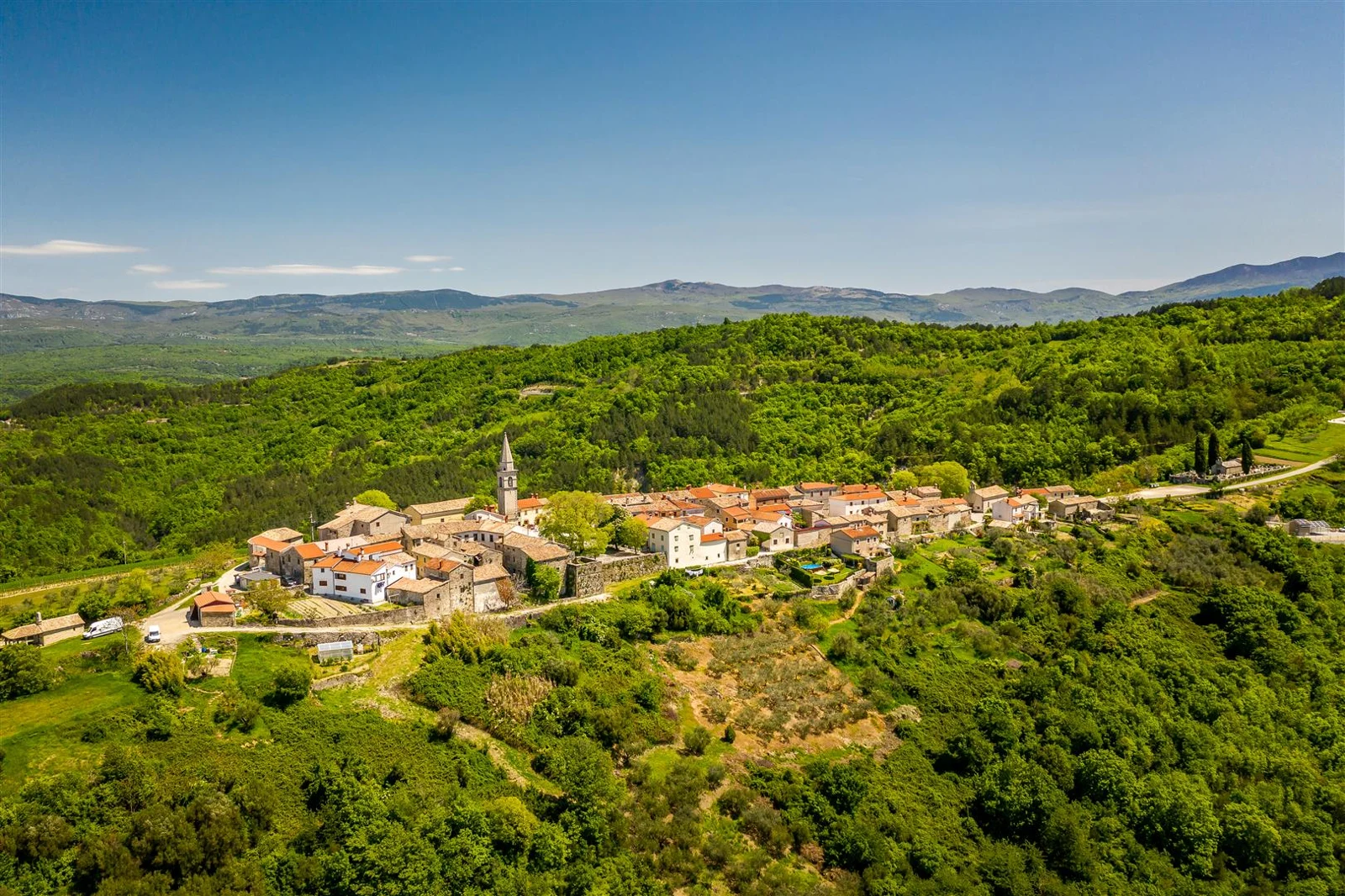 MAKE TIME FOR DRAGUĆ
Come with curiosity.
Leave with a little more.
A thoughtful guide to arriving, exploring, and making the most of a village-sized escape.
Plan your visit